with the collaboration of Iranian Food Science and Technology Association (IFSTA)

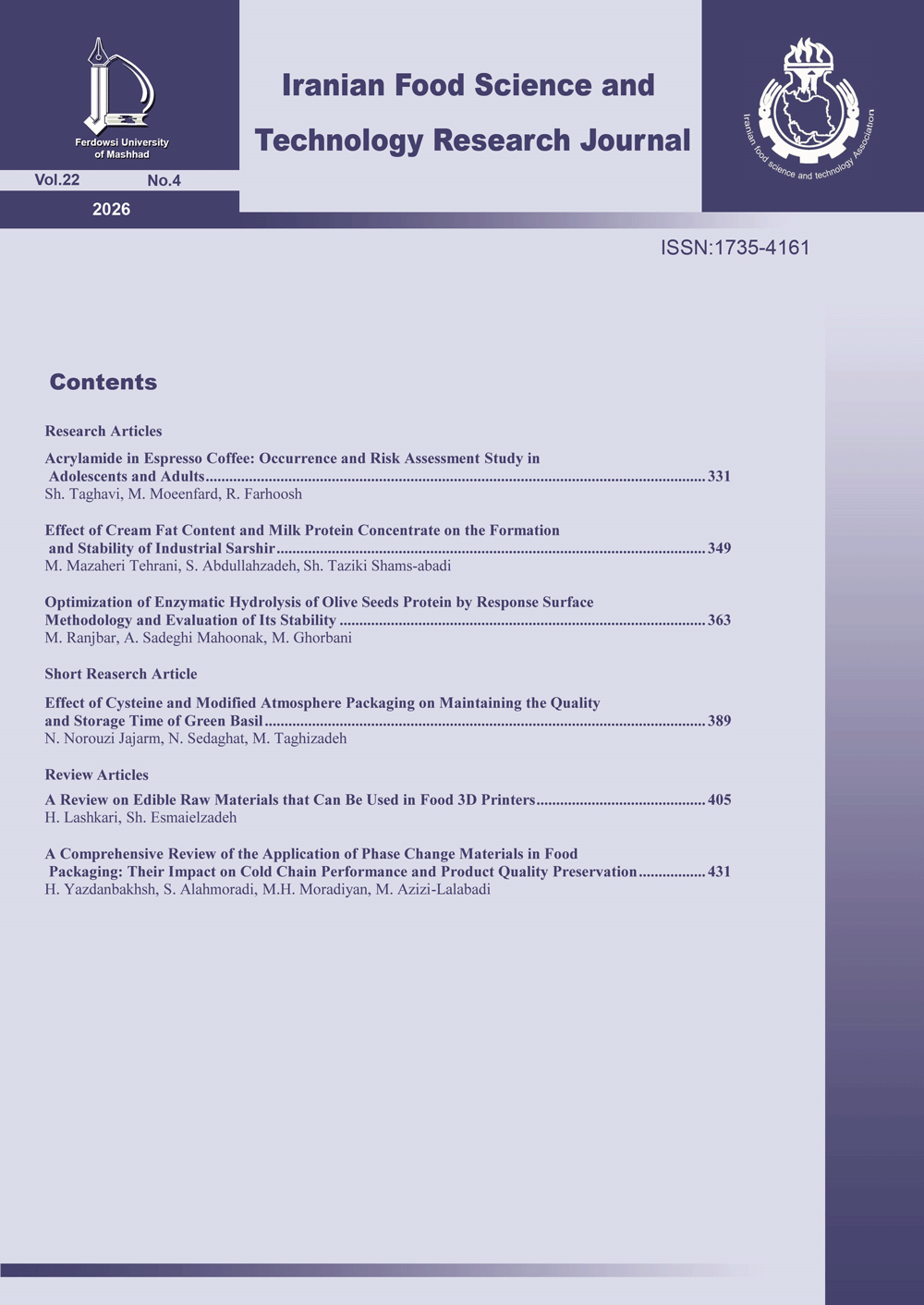
Acrylamide in Espresso Coffee: Occurrence and Risk Assessment Study in Adolescents and Adults

Document Type : Research Article

Authors

Department of Food Science and Technology, Faculty of Agriculture, Ferdowsi University of Mashhad, Mashhad, Iran

10.22067/ifstrj.2026.98206.1560
Abstract
Introduction
Coffee is one of the most widely consumed beverages worldwide, with an estimated annual intake of about 500 billion cups. Roasting is a key step in coffee processing that develops the desirable color, flavor, and aroma, but it also promotes the formation of acrylamide through the Maillard reaction. Acrylamide is classified as a probable human carcinogen and has attracted increasing attention due to its occurrence in a variety of heat-treated foods. Given the growing popularity of coffee among the Iranian population, determining acrylamide levels in espresso and assessing the associated health risks are of public health importance. Therefore, this study aimed to determine acrylamide levels in commercially available espresso coffees and assess the related cancer and non-cancer risks in adolescents and adults.
Materials and Methods
In this study, a total of 35 espresso coffee samples were collected from the market. Of these, 26 samples were obtained from coffee shops (ES-C), and 9 were prepared at home from commercial coffee powders using a household espresso machine (ES-H), following common local preparation practices. Acrylamide concentrations in all samples were determined using HPLC-DAD with a mobile phase composed of water/acetonitrile (97:3, v/v) at a flow rate of 0.7 mL/min and a detection wavelength of 202 nm.  The average daily intake (ADI) of acrylamide (μg/kg body weight/day) was estimated for adolescents and adults based on the measured acrylamide concentrations and the available consumption data. Health risk assessment was performed by calculating the margin of exposure (MOE) for carcinogenic effects, estimating the incremental lifetime cancer risk (ILCR), and evaluating the non-carcinogenic risk using the target hazard quotient (THQ). The obtained MOE values were compared with the reference value of 10,000. In addition, carcinogenic and non-carcinogenic risks were evaluated against internationally accepted benchmarks, including those established by the United States Environmental Protection Agency (USEPA).
Results and Discussion
Acrylamide was detected in all analyzed espresso samples. The concentration of acrylamide in ES-C ranged from 2.15 to 9.16 μg/100 mL and was consistently higher than that observed in ES-H, which ranged from 0.93 to 4.00 μg/100 mL. Despite the presence of acrylamide in all samples, the estimated dietary exposure via espresso consumption was relatively low. The EDI of acrylamide from espresso was calculated to be 0.004 μg/kg bw/day for adolescents and 0.007 μg/kg bw/day for adults. For all samples and both age groups, the MOE values were greater than 10,000, indicating a low level of concern and a low priority for risk management regarding carcinogenic effects. The incremental lifetime cancer risk attributed to acrylamide exposure from espresso consumption was estimated at 0.244 × 10⁻⁵ for adolescents and 0.221 × 10⁻⁵ for adults. Since both values were below the 10⁻⁵ benchmark proposed by the United States Environmental Protection Agency (USEPA), the associated carcinogenic risk was considered to be low. Non‑carcinogenic risk indices were 0.0019 for adolescents and 0.0026 for adults, clearly below the threshold of 1, suggesting that non‑cancer effects are unlikely at the observed exposure levels. For all evaluated parameters, acrylamide exposure and the associated health risks were higher in adults than in adolescents. This difference can be attributed to higher consumption rates and greater body weight-adjusted intake among adults.
Conclusion
This study shows that acrylamide was present in all espresso coffee samples collected from the market, with coffee shop espresso generally containing higher levels than household espresso coffees. Nevertheless, acrylamide exposure through espresso consumption alone does not appear to pose a serious health risk to the studied adolescent and adult populations. The high MOE values, low estimated cancer risks, and non‑carcinogenic indices well below 1 collectively support a low level of concern. However, espresso is considered only one contributor to total dietary acrylamide intake, as acrylamide can also be formed in other thermally processed foods. Therefore, evaluation of combined exposure from various dietary sources and further investigation of cumulative health risks are recommended to provide a more comprehensive risk assessment.

Keywords

Subjects

Authors retain the copyright. This is an open access article distributed under Creative Commons Attribution 4.0 International License (CC BY 4.0).

  1. Aghvami, M., Mohammadi, A., Khaniki, G.J., Ahmadi, M., Moazzen, M., Arabameri, M., & Shariatifar, N. (2023). Investigation of cocoa and cinnamon effect on acrylamide formation in cakes production using GC/MS method: A risk assessment study. Food Chemistry: X, 18, 100629. https://doi.org/10.1016/j.fochx.2023.100629
  2. Akbari-Adergani, B., Shahbazi, R., Esfandiari, Z., Kamankesh, M., Vakili Saatloo, N., Abedini, A., . . . Sadighara, P. (2023). Acrylamide content of industrial and traditional popcorn collected from Tehran’s market, Iran: A risk assessment study. Journal of Food Protection, 86(1), 100001. https://doi.org/10.1016/j.jfp.2022.10.001
  3. Alves, R.C., Soares, C., Casal, S., Fernandes, J.O., & Oliveira, M.B.P.P. (2010). Acrylamide in espresso coffee: Influence of species, roast degree and brew length. Food Chemistry, 119(3), 929-934. https://doi.org/10.1016/j.foodchem.2009.07.051
  4. Arisseto, A.P., & Vicente, E. (2015). Chapter 65 - Estimate of Acrylamide Intake from Coffee and Health Risk Assessment. In R. Preedy (Ed.), Coffee in Health and Disease Prevention (pp. 575-584). San Diego: Academic Press. https://doi.org/10.1016/B978-0-12-409517-5.00065-6
  5. Barrios-Rodríguez, Y.F., Pedreschi, F., Rosowski, J., Gómez, J.P., Figari, N., Castillo, O., & Mariotti Celis, M.S. (2021). Is the dietary acrylamide exposure in Chile a public health problem? Food Additives & Contaminants: Part A, 38(7), 1126-1135. https://doi.org/10.1080/19440049.2021.1914867
  6. Basaran, B., & Aydin, F. (2020). Estimating the acrylamide exposure of adult individuals from coffee: Turkey. Food Addit Contam Part A Chem Anal Control Expo Risk Assess, 37(12), 2051-2060. https://doi.org/10.1080/19440049.2020.1819570
  7. Basaran, B., Aydin, F., & Kaban, G. (2020). The determination of acrylamide content in brewed coffee samples marketed in Turkey. Food Addit Contam Part A Chem Anal Control Expo Risk Assess, 37(2), 280-287. https://doi.org/10.1080/19440049.2019.1685133
  8. Bertuzzi, T., Martinelli, E., Mulazzi, A., & Rastelli, S. (2020). Acrylamide determination during an industrial roasting process of coffee and the influence of asparagine and low molecular weight sugars. Food Chemistry, 303, 125372. https://doi.org/10.1016/j.foodchem.2019.125372
  9. Deribew, H.A., & Woldegiorgis, A.Z. (2021). Acrylamide levels in coffee powder, potato chips and French fries in Addis Ababa city of Ethiopia. Food Control, 123, 107727. https://doi.org/10.1016/j.foodcont.2020.107727
  10. EFSA, E. P. o. C. i. t. F. C. (2015). Scientific Opinion on acrylamide in food. EFSA Journal, 13(6), 4104. https://doi.org/10.2903/j.efsa.2015.4104
  11. Endeshaw, H., & Belay, A. (2020). Optimization of the roasting conditions to lower acrylamide content and improve the nutrient composition and antioxidant properties of Coffea arabica. PloS One, 15(8), e0237265. https://doi.org/10.1371/journal.pone.0237265
  12. Eslamizad, S., Kobarfard, F, sitsimpikou, C., Tsatsakis, A., Tabib, K., & Yazdanpanah, H. (2019). Health risk assessment of acrylamide in bread in Iran using LC-MS/MS. Food and Chemical Toxicology, 126, 162-168. https://doi.org/10.1016/j.fct.2019.02.019
  13. Fan, M., Xu, X., Lang, , Wang, W., Wang, X., Xin, A., . . . Zhu, B. (2023). Toxicity, formation, contamination, determination and mitigation of acrylamide in thermally processed plant-based foods and herbal medicines: A review. Ecotoxicology Environment Safty, 260, 115059. https://doi.org/10.1016/j.ecoenv.2023.115059
  14. Freitas, V.V., Borges, L.L.R., Castro, G.A.D., Almeida, L.F., Crepalde, L.T., Kobi, H.d.B., . . . Stringheta, P.C. (2024). Influence of roasting levels on chemical composition and sensory quality of Arabica and Robusta coffee: A comparative study. Food Bioscience, 59, 104171. https://doi.org/10.1016/j.fbio.2024.104171
  15. Galuch, M.B., Magon, T.F.S., Silveira, R., Nicacio, A.E., Pizzo, J.S., Bonafe, E.G., . . . Visentainer, J. V. (2019). Determination of acrylamide in brewed coffee by dispersive liquid-liquid microextraction (DLLME) and ultra-performance liquid chromatography tandem mass spectrometry (UPLC-MS/MS). Food Chem, 282, 120-126. https://doi.org/10.1016/j.foodchem.2018.12.114
  16. Garg, R., & Singla, N. (2025). An architecture for acrylamide detection in carbohydrate-rich food products using deep learning method. Journal of Food Composition and Analysis, 142. https://doi.org/10.1016/j.jfca.2025.107497
  17. Haiyan Wang, A.W.M.L.C., Shaomin Shuang, A., Martin, M. (2008). SPE/HPLC/UV studies on acrylamide in deep-fried flour-based indigenous Chinese foods. Microchemical Journal, 89(2), 90-97. https://doi.org/10.1016/j.microc.2007.12.006
  18. Han, J.-W., Boo, H., & Chung, M.-S. (2020). Effects of extraction conditions on acrylamide/furan content, antioxidant activity, and sensory properties of cold brew coffee. Food Science and Biotechnology, 29(8), 1071-1080. https://doi.org/10.1007/s10068-020-00747-1
  19. Kang, D.-e., Lee, H.-U., Davaatseren, M., & Chung, M.-S. (2020). Comparison of acrylamide and furan concentrations, antioxidant activities, and volatile profiles in cold or hot brew coffees. Food Science and Biotechnology, 29(1), 141-148. https://doi.org/10.1007/s10068-019-00644-2
  20. Karami, M., Akbari-Adergani, B., Jahed Khaniki, G., Shariatifar, N., & Sadighara, P. (2022). Determination and health risk assessment of acrylamide levels in instant coffee products available in Tehran markets by GC-MS. International Journal of Environmental Analytical Chemistry, 1-10. https://doi.org/10.1080/03067319.2022.2076225
  21. Kashani, H., Gharibzadeh, F., Nakhjirgan, P., Younesian, M., & Zaeim, M. (2021). WHO Human Health Risk Assessment Toolkit: Chemical Hazard (Second Edition ed.). Tehran: Teymour Zadeh Novin.
  22. Khaloo Kermani, P., Moeenfard, M., Farhoosh, R., & Alves, A. (2023). Modified QuEChERS purification method for analysis of acrylamide in roasted Phoenix dactylifera seeds via HPLC–PDA. Journal of Food Measurement and Characterization. https://doi.org/10.1007/s11694-023-02015-2
  23. Malmir, H., Shayanfar, M., Mohammad-Shirazi, M., Tabibi, H., Sharifi, G., & Esmaillzadeh, A. (2019). Tea and coffee consumption in relation to glioma: a case-control study. European Journal of Nutrition, 58(1), 103-111. https://doi.org/10.1007/s00394-017-1575-z
  24. Mesías, M., & Morales, F.J. (2016). Acrylamide in coffee: Estimation of exposure from vending machines. Subtropical Plant Science, 48, 8-12. https://doi.org/10.1016/j.jfca.2016.02.005
  25. Michalak, J., Czarnowska-Kujawska, M., Gujska, E., Klepacka, J., & Tońska, E. (2020). Effect of the brewing process on the acrylamide content in coffee beverages. Proceedings of the Nutrition Society. 2020;79(OCE2):E293. https://doi.org/10.1017/S0029665120002414
  26. Michalak, J., Gujska, E., & Kuncewicz, A. (2013). RP-HPLC-DAD studies on acrylamide in cereal-based baby foods. Journal of Food Composition and Analysis, 32(1), 68-73. https://doi.org/10.1016/j.jfca.2013.08.006
  27. Nematollahi, A., Kamankesh, M., Hosseini, H., Ghasemi, J., Hosseini-Esfahani, F., Mohammadi, A., & Mousavi Khaneghah, A. (2020). Acrylamide content of collected food products from Tehran’s market: a risk assessment study. Environmental Science and Pollution Research, 27(24), 30558-30570. https://doi.org/10.1007/s11356-020-09323-w
  28. Oroian, M., Amariei, S., & Gutt, G. (2015). Acrylamide in Romanian food using HPLC-UV and a health risk assessment. Food Addit Contam Part B Surveill, 8(2), 136-141. https://doi.org/10.1080/19393210.2015.1010240
  29. Peris-Camarasa, B., Pardo, O., Fernández, S. F., Dualde, P., & Coscollà, C. (2023). Assessment of acrylamide exposure in Spain by human biomonitoring: Risk and predictors of exposure. Environmental Pollution, 331, 121896. https://doi.org/10.1016/j.envpol.2023.121896
  30. PubChem. (2023). Acrylamide. Retrieved from https://pubchem.ncbi.nlm.nih.gov/compound/Acrylamide
  31. Riboldi, B.P., Vinhas, Á.M., & Moreira, J.D. (2014). Risks of dietary acrylamide exposure: A systematic review. Food Chemistry, 157, 310-322. https://doi.org/10.1016/j.foodchem.2014.02.046
  32. Roudbari, A., Rafiei Nazari. , Shariatifar, N., Moazzen, M., Abdolshahi, A., Mirzamohammadi, S., . . . Arabameri, M. (2021). Concentration and health risk assessment of polycyclic aromatic hydrocarbons in commercial tea and coffee samples marketed in Iran. Environmental Science and Pollution Research, 28(4), 4827-4839. https://doi.org/10.1007/s11356-020-10794-0
  33. Schouten, M.A., Tappi, S., & Romani, S. (2020). Acrylamide in coffee: formation and possible mitigation strategie- a review. Critical Reviews in Food Science and Nutrition, 60(22), 3821-3807. https://doi.org/10.1080/10408398.2019.1708264
  34. Sebastià, A., Pallarés, N., Bridgeman, L., Juan-García, A., Castagnini, J.M., Ferrer, E., . . . Berrada, H. (2023). A critical review of acrylamide green extraction and determination in food matrices: Current insights and future perspectives. TrAC Trends in Analytical Chemistry, 167, 117267. https://doi.org/10.1016/j.trac.2023.117267
  35. Sharma, N., Thakur, S., Bains, A., Goksen, G., Ali, N., Ansari, M.A., . . . Chawla, P. (2025). Green hydrothermal approach for the synthesis of carbon quantum dots from waste tea bags for acrylamide detection in drinking water: A fluorescence assay validated by HPLC-PDA analysis. Food Chemistry: X, 25, 102043. https://doi.org/10.1016/j.fochx.2024.102043
  36. Shimadzu. (2021). Differences Between Using Acetonitrile and Methanol for Reverse Phase Chromatography. Retrieved from https://www.shimadzu.com/an/service-support/technical-support/analysis-basics/lib/lctalk/35/35lab.html
  37. Strocchi, G., Rubiolo, P., Cordero, C., Bicchi, , & Liberto, E. (2022). Acrylamide in coffee: What is known and what still needs to be explored. A review. Food Chemistry, 393, 133406. https://doi.org/10.1016/j.foodchem.2022.133406
  38. Taghizadeh, S.F., Azizi, M., Hassanpourfard, G., Rezaee, R., & Karimi, G. (2023). Assessment of carcinogenic and non-carcinogenic risk of exposure to metals via consumption of coffee, tea, and herbal tea in Iranians. Biological Trace Element Research, 201(3), 1520-1537. https://doi.org/10.1007/s12011-022-03239-x
  39. Wang, H., Feng, F., Guo, Y., Shuang, S., & Choi, M.M.F. (2013). HPLC-UV quantitative analysis of acrylamide in baked and deep-fried Chinese foods. Journal of Food Composition and Analysis, 31(1), 7-11. https://doi.org/10.1016/j.jfca.2013.02.006
  40. Xu, Y., Cui, B., Ran, , Liu, Y., Chen, H., Kai, G., & Shi, J. (2014). Risk assessment, formation, and mitigation of dietary acrylamide: Current status and future prospects. Food and Chemical Toxicology, 69, 1-12. https://doi.org/10.1016/j.fct.2014.03.037
  41. Yan, F., Wang, L., Zhao, L., Wang, C., Lu, Q., & Liu, R. (2023). Acrylamide in food: Occurrence, metabolism, molecular toxicity mechanism and detoxification by phytochemicals. Food and Chemical Toxicology, 175, 113696. https://doi.org/10.1016/j.fct.2023.113696
  42. Zahir, A., Ge, Z., & Khan, I.A. (2025). Public health risks associated with food process contaminants – A Review. Journal of Food Protection, 88(2), 100426. https://doi.org/10.1016/j.jfp.2024.100426
Send comment about this article
Enter Name.
Enter a valid email address.
Enter a vaid affiliation.
Enter comments (At leaset 10 words)
CAPTCHA Image
Enter Security Code Correctly.

Articles in Press, Corrected Proof
Available Online from 24 August 2026

  • Receive Date 31 March 2026
  • Revise Date 17 June 2026
  • Accept Date 27 June 2026
  • First Publish Date 24 August 2026