با همکاری انجمن علوم و صنایع غذایی ایران

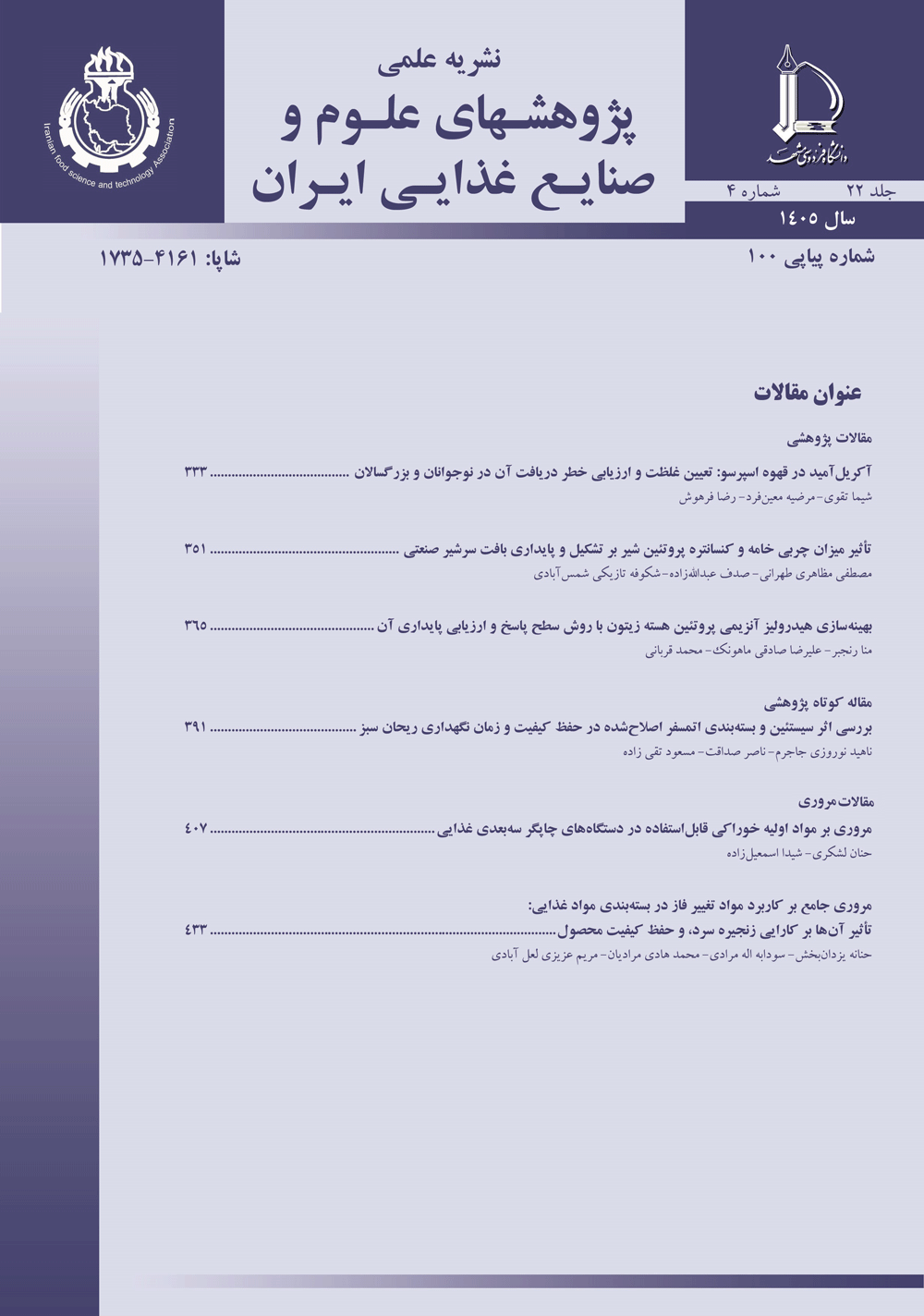
بهینه‌سازی هیدرولیز آنزیمی پروتئین هسته زیتون با روش سطح پاسخ و ارزیابی پایداری آن

نوع مقاله : مقاله پژوهشی

نویسندگان

گروه علوم و صنایع غذایی، دانشکده صنایع غذایی، دانشگاه علوم کشاورزی و منابع طبیعی گرگان، گرگان، ایران

10.22067/ifstrj.2026.99163.1589
چکیده
هسته زیتون به‌عنوان یک محصول جانبی صنعت روغن‌گیری، منبعی غنی از پروتئین با پتانسیل تولید پپتیدهای زیست‌فعال است. در این پژوهش، هیدرولیز آنزیمی پروتئین استخراج‌شده از هسته زیتون (رقم زر زیتون) با استفاده از دو آنزیم آلکالاز و تریپسین، با هدف بهینه‌سازی شرایط فرآیند (زمان و نسبت آنزیم به سوبسترا) با روش سطح پاسخ (Central Composite Design) انجام شد. فعالیت آنتی‌اکسیدانی هیدرولیزات‌ها با سه آزمون مهار رادیکال DPPH، قدرت احیاکنندگی آهن و ظرفیت آنتی‌اکسیدانی کل (TAC، روش فسفومولیبدات) ارزیابی گردید. نتایج نشان داد که هر دو متغیر تأثیر معنی‌داری بر پاسخ‌ها داشته و الگوی پاسخ به‌صورت درجه دوم با وجود یک ناحیه بهینه مرکزی بود. هیدرولیزات حاصل از آلکالاز در تمامی شرایط، فعالیت آنتی‌اکسیدانی بالاتری نسبت به تریپسین نشان داد. طبق نتایج مقادیر بهینه برای آنزیم آلکالاز زمان 150 دقیقه و نسبت آنزیم به سوبسترا 2% و برای آنزیم تریپسین زمان 139 دقیقه و نسبت آنزیم به سوبسترا 2% می‌­باشد. همچنین پایداری هیدرولیزات بهینه در برابر pH (۳ تا ۸)، حرارت (۹۵ درجه سانتی‌گراد تا ۷۵ دقیقه)، نگهداری در یخچال (۴ درجه، ۱۵ روز)، چرخه‌های انجماد-ذوب (۱۵ روز) و دمای محیط (۲۵ درجه، ۷ روز) بررسی شد. فعالیت آنتی‌اکسیدانی در تمامی شرایط به‌طور وابسته به زمان کاهش یافت، اما هیدرولیز آلکالاز پایداری بهتری نشان داد. یافته‌های این پژوهش نشان می‌دهد که هیدرولیز کنترل‌شده با آلکالاز در شرایط بهینه، روشی کارآمد برای تولید پپتیدهای آنتی‌اکسیدان پایدار از هسته زیتون با قابلیت کاربرد در صنایع غذایی و دارویی است.

کلیدواژه‌ها

موضوعات

عنوان مقاله English

Optimization of Enzymatic Hydrolysis of Olive Seeds Protein by Response Surface Methodology and Evaluation of Its Stability

نویسندگان English

Mona Ranjbar
Alireza Sadeghi Mahoonak
Mohammad Ghorbani
Department of Food Science and Technology, Faculty of Food Industry, Gorgan University of Agricultural Sciences and Natural Resources, Gorgan, Iran
چکیده English

Introduction
 Olive Seeds is a major by-product of the olive oil industry, produced in millions of tons annually. It contains significant amounts of protein (approximately 13.5%) along with fiber, lipids, and phenolic compounds. However, native proteins have low solubility and complex structures that limit their functionality. Enzymatic hydrolysis is an eco-friendly method to release bioactive peptides with antioxidant, ACE-inhibitory, and cholesterol-lowering activities. The choice of enzyme is crucial; alcalase (a broad-specificity serine protease) and trypsin (a specific protease cleaving at lysine and arginine residues) produce different peptide profiles. Process variables such as hydrolysis time and enzyme-to-substrate (E/S) ratio significantly affect the degree of hydrolysis and antioxidant activity. Response Surface Methodology (RSM) is a powerful statistical tool for optimizing such multi-variable processes. Moreover, the stability of hydrolysates during storage, thermal processing, freeze-thaw cycles, and pH changes is essential for industrial applications. This study aimed to optimize the hydrolysis conditions (time and E/S ratio) for olive seeds protein using alcalase and trypsin via RSM, evaluate the antioxidant activities, and assess the stability of the optimal hydrolysates under different pH, heat, refrigeration, freeze-thaw, and ambient storage conditions.
Materials and Methods
Olive seeds were obtained from local market at Gorgan then dried, ground, defatted with hexane (AOAC method), and protein was isolated by alkaline extraction (pH 11) followed by isoelectric precipitation (pH 4). Protein isolate (5% w/v) was hydrolyzed in Tris-HCl buffer (pH 8 for alcalase, pH 7 for trypsin) at 50°C (alcalase) or 37°C (trypsin) with E/S ratios of 1–3% and 30–210 min according to a Central Composite Design (CCD) approach. The reaction was stopped by heating at 85°C for 30 min, then centrifuged and freeze-dried. Antioxidant activities were measured by different methods namely: DPPH radical scavenging, reducing power, and total antioxidant capacity (phosphomolybdenum method). Stability tests included: pH stability (pH 3–8, 30 min), thermal stability (95°C for 15–75 min), refrigeration storage stability (4°C for 15 days), freeze-thaw cycles stability (15 days), and ambient storage (25°C for 7 days). Data were analyzed by Design Expert, ANOVA followed by Duncan's multirange test (SPSS), and graphs prepared by Excel software.
Results and Discussion
RSM analysis showed that both time and E/S ratio had significant quadratic effects on DPPH, FRAP, and TAC for both enzymes. For alcalase, response surfaces exhibited a dome-shaped central peak with optimal conditions around 150 min and E/S 2%. For trypsin, a rising quadratic plateau was observed, with optimal conditions around 139 min and E/S 2%. These patterns confirm that excessive hydrolysis reduces antioxidant activity due to over-degradation of active peptides into free amino acids. Alcalase hydrolysates consistently showed higher antioxidant activities than trypsin hydrolysates, attributed to alcalase's preference for hydrolyzing at hydrophobic/aromatic amino acids (Phe, Tyr, Trp, Leu, Val) which are strong electron donors. Stability studies revealed, pH: Maximum TAC at pH 7–8, minimum at pH 3–4 (near isoelectric point). Alcalase hydrolysate was more stable. Heat (95°C): Gradual time-dependent decrease in both FRAP and TAC; alcalase hydrolysate retained higher activity after 75 min. Refrigeration (4°C, 15 days): Progressive decline in TAC and FRAP; alcalase hydrolysate showed slower decay. Freeze-thaw (15 days): Significant reduction after each cycle, mainly due to ice crystal damage and cryoconcentration; alcalase hydrolysate more resistant. Ambient (25°C, 7 days): Faster decline than refrigeration; alcalase hydrolysate.
Conclusion
The optimal hydrolysis conditions for olive seeds protein were determined using RSM. Alcalase-produced hydrolysate exhibited superior antioxidant activity and stability compared to trypsin-hydrolysate due to the release of hydrophobic/aromatic-rich peptides. Stability decreased in all tested conditions (heat, freeze-thaw, storage), but alcalase hydrolysateconsistently showed higher retention. These findings support the valorization of olive seeds protein as a source of stable antioxidant peptides for food and pharmaceutical applications.

کلیدواژه‌ها English

Antioxidant
Bioactive peptide
Olive seeds
Optimization
Protease

Authors retain the copyright. This is an open access article distributed under Creative Commons Attribution 4.0 International License (CC BY 4.0).
  1. Adjonu, R., Doran, G., Torley, P., & Agboola, S. (2023). Stability of whey protein bioactive peptide‐stabilised nanoemulsions: effect of pH, ions, heating and freeze–thawing. International Journal of Food Science & Technology, 58(4), 1234-1245. https://doi.org/10.1111/ijfs.16292
  2. Ahmadi, F., Kadivar, M., & Shahedi, M. (2007). Antioxidant activity of Kelussia odoratissima Mozaff. in model and food systems. Food Chemistry, 105(1), 57–64. https://doi.org/10.1016/j.foodchem.2007.03.056
  3. Alizadeh Firozeh, R., Mirzaei, M., & Fadaei Noghani, V. (2021). Antioxidant activity stability of lentil protein hydrolysate against heat and pH treatments. Iranian Journal of Food Science and Technology Research, 17(5), 849–861. https://doi.org/10.22067/ifstrj.v18i1.87854
  4. AOAC. (1990). Official Methods of Analysis (15th ed.). Association of Official Analytical Chemists.
  5. Ashaolu, T.J., Le, T.D., & Suttikhana, I. (2023). Stability and bioactivity of peptides in food matrices based on processing conditions. Food Research International, 168, 112786. https://doi.org/10.1016/j.foodres.2023.112786
  6. Bao, Y., Ertbjerg, P., Estévez, M., Yuan, L., & Gao, R. (2021). Freezing of meat and aquatic food: Underlying mechanisms and implications on protein oxidation. Comprehensive Reviews in Food Science and Food Safety, 20(6), 5548-5569. https://doi.org/10.1111/1541-4337.12841
  7. Bartolomei, M., Bollati, C., Bellumori, M., Cecchi, L., Mulinacci, N., Lammi, C., & Arnoldi, A. (2022). Exploitation of olive (Olea europaea) seed proteins as upgraded source of bioactive peptides with multifunctional properties: Focus on antioxidant and dipeptidyl-dipeptidase-IV inhibitory activities, and glucagon-like peptide 1 improved modulation. Antioxidants, 11(9), 1730. https://doi.org/10.3390/antiox11091730
  8. Chen, X., Wu, J., Cai, X., & Wang, S. (2021). Production, structure–function relationships, mechanisms, and applications of antifreeze peptides. Comprehensive Reviews in Food Science and Food Safety, 20(1), 542-562. https://doi.org/10.1111/1541-4337.12655
  9. Dahdouh, A., Khay, I., Le Brech, Y., El Maakoul, A., & Bakhouya, M. (2023). Olive oil industry: A review of waste stream composition, environmental impacts, and energy valorization paths. Environmental Science and Pollution Research, 30(16), 45473-45497. https://doi.org/10.1007/s11356-023-25867-z
  10. Davies, P.L. (2014). Ice-binding proteins: a remarkable diversity of structures for stopping and starting ice growth. Trends in Biochemical Sciences, 39(11), 548-555. https://doi.org/10.1016/j.tibs.2014.09.005
  11. Esteve, C., Marina, M.L., & García, M.C. (2015). Novel strategy for the revalorization of olive (Olea europaea) residues based on the extraction of bioactive peptides. Food Chemistry, 167, 272-280. https://doi.org/10.1016/j.foodchem.2014.06.090
  12. Farzanfar, F., Mahoonak, A.S., Ghorbani, M., Ghaboos, S.H.H., & Kaveh, S. (2025). Encapsulation of ultrasound-assisted flaxseed meal protein hydrolysate in nanoliposomal systems by new formulation: Physicochemical properties, release behavior under simulated gastrointestinal conditions. Food Chemistry: X, 27, 102389. https://doi.org/10.1016/j.fochx.2025.102389
  13. Fathi, M., Hosseini, F. S., Ramezani, R., & Rashidi, L. (2022). Optimized enzymatic hydrolysis of olive pomace proteins using response surface methodology. Applied Food Biotechnology, 9(2), 79–90. https://doi.org/10.22037/afb.v9i2.36192
  14. Habinshuti, I., Nsengumuremyi, D., Muhoza, B., Ebenezer, F., Aregbe, A.Y., & Ndisanze, M.A. (2023). Recent and novel processing technologies coupled with enzymatic hydrolysis to enhance the production of antioxidant peptides from food proteins: A review. Food Chemistry, 423, 136313. https://doi.org/10.1016/j.foodchem.2023.136313
  15. He, F. (2011). Bradford protein assay. Bio-Protocol, e45-e45. https://doi.org/10.21769/bioprotoc.45
  16. Hernández-Corroto, E., Marina, M.L., & García, M.C. (2020). Identification of peptides potentially responsible for in vivo hypolipidemic activity of a hydrolysate from olive seeds. Journal of Agricultural and Food Chemistry, 68(14), 4237–4246. https://doi.org/10.1021/acs.jafc.0c01280
  17. Hwang, J., Lee, S., Kim, H., Park, J., Choi, Y., & Jung, S. (2024a). Comparative exploration of antioxidant properties of Alcalase- and trypsin-hydrolyzed porcine by-products and their classification for industrial use. Applied Sciences, 15(1), 47. https://doi.org/10.3390/app15010047
  18. Hwang,, Son, W.Y., Jeong, E.J., Kim, K.S., Shin, E.C., Song, D.H., & Kim, H.W. (2024b). Comparative exploration of antioxidant properties of Alcalase-and Trypsin-hydrolyzed porcine by-products and their classification for industrial Use. Applied Sciences, 15(1), 47. https://doi.org/10.3390/app15010047
  19. Islam, M., Huang, Y., Islam, S., Fan, B., Tong, L., & Wang, F. (2022). Influence of the degree of hydrolysis on functional properties and antioxidant activity of enzymatic soybean protein hydrolysates. Molecules, 27(18), 6110. https://doi.org/10.3390/molecules27186110
  20. Jogi, N., Mathew, A., & Mamatha, B.S. (2024). Modification of bioactive properties in food protein hydrolysates by alcalase and trypsin. Journal of Health and Allied Sciences NU, 14(S 01), S26-S34. https://doi.org/10.1055/s-0044-1782643
  21. Kleekayai, T., O’Neill, A., Clarke, S., Holmes, N., O’Sullivan, B., & FitzGerald, R.J. (2022). Contribution of hydrolysis and drying conditions to whey protein hydrolysate characteristics and in vitro antioxidative properties. Antioxidants, 11(2), 399. https://doi.org/10.3390/antiox11020399
  22. Li, Z., Paulson, A.T., & Gill, T.A. (2015). Encapsulation of bioactive salmon protein hydrolysates with chitosan-coated liposomes. Journal of Functional Foods, 19, 733-743. https://doi.org/10.1016/j.jff.2015.09.058
  23. Lin, Y., Liu, Y., Liu, S., Kortesniemi, M., & Liu, J. (2022). Optimization of enzymatic hydrolysis of Perilla meal protein for hydrolysate with high hydrolysis degree and antioxidant activity. Molecules, 27(3), 1079. https://doi.org/10.3390/molecules27031079
  24. Liu, D., Guo, Y., & Ma, H. (2023). Production, bioactivities and bioavailability of bioactive peptides derived from walnut origin by-products: a review. Critical Reviews in Food Science and Nutrition, 63(26), 8032-8047. https://doi.org/10.1080/10408398.2022.2054933
  25. Maestri, D., Barrionuevo, D., Bodoira, R., Zafra, A., Jiménez-López, J., & Alché, J.D.D. (2019). Nutritional profile and nutraceutical components of olive (Olea europaea ) seeds. Journal of Food Science and Technology, 56(9), 4359-4370. https://doi.org/10.1007/s13197-019-03904-5
  26. Mardani, M., Badakné, K., Farmani, J., & Aluko, R.E. (2023). Antioxidant peptides: Overview of production, properties, and applications in food systems. Comprehensive Reviews in Food Science and Food Safety, 22(1), 46-106. https://doi.org/10.1111/1541-4337.13061
  27. Martinez, F.G., Ambrosi, V., Rocha, G., Sancho, A.M., & Szerman, N. (2023). Enzymatic hydrolysis as a valorization strategy of bovine lungs: Optimization of process variables and study of antioxidant capacity. Repositorios Digitales MINCyT, Argentina. https://doi.org/10.1002/jsf2.110
  28. Mohammad, S.S., da Silva Ferreira, M.V., Jacintho Barbosa, M.I., & Barbosa Junior, J.L. (2023). Characteristics of enzymatic hydrolysis of protein from different food sources and potential separation techniques. Current Nutrition & Food Science, 19(6), 590-601. https://doi.org/10.2174/1573401318666221003104005
  29. Nooshi Manjili, Z., & Sadeghi Mahoonak, A. (2024). Effects of microwave pretreatment on enzymatic hydrolysis of pumpkin seed protein (Cucurbita maxima L.) using trypsin and investigation of the protein antioxidant activity using response surface methodology. Nutrition and Food Sciences Research, 11(4). https://doi.org/10.1016/j.heliyon.2024.e29669
  30. Pereira, N.D.L.Á., Fangio, M.F., Rodriguez, Y.E., Bonadero, M.C., Harán, N.S., & Fernández‐Gimenez, A.V. (2022). Characterization of liquid protein hydrolysates shrimp industry waste: Analysis of antioxidant and microbiological activity, and shelf life of final product. Journal of Food Processing and Preservation, 46(8), e15526. https://doi.org/10.1111/jfpp.15526
  31. Pérez-Gálvez, R., Maldonado-Valderrama, J., Jones, N.C., Hoffmann, S.V., Guadix, E., & Garcia-Moreno, P.J. (2024). Influence of the enzymatic treatment and pH on the interfacial and emulsifying properties of sunflower and olive protein hydrolysates. Food Hydrocolloids, 154, 110135. https://doi.org/10.1016/j.foodhyd.2024.110135
  32. Prados, I.M., Dominguez-Vega, E., Marina, M.L., & Garcia, M.C. (2023). Maximizing hypocholesterolemic peptides from an olive byproduct by enzymatic hydrolysis. Lwt, 187, 115371. https://doi.org/10.1016/j.lwt.2023.115371
  33. Rivero-Pino, F. (2023). Bioactive food-derived peptides for functional nutrition: Effect of fortification, processing and storage on peptide stability and bioactivity within food matrices. Food Chemistry, 406, 135046. https://doi.org/10.1016/j.foodchem.2022.135046
  34. Roy, M., Ullah, S., Alam, M., & Islam, M.A. (2021). Evaluation of quality parameters and antioxidant properties of protein concentrates and hydrolysates of hyacinth bean (Lablab purpureus). Legume Science, 3(4), e128. https://doi.org/10.1002/leg3.128
  35. Sarringkarin, W., & Laokuldilok, T. (2017). Optimization of the production conditions of glutinous rice bran protein hydrolysate with antioxidative properties. Chiang Mai University Journal of Natural Sciences, 16(1), 1–14. https://doi.org/10.12982/cmujns.2017.0001
  36. Sripokar, P., Panya, A., & Sriwattana, S. (2022). Op timization of enzymatic hydrolysis by alcalase and flavourzyme to enhance the antioxidant properties of jasmine rice bran protein hydrolysate. Scientific Reports, 12, 12582. https://doi.org/10.1038/s41598-022-16821-z
  37. Udenigwe, C.C., & Aluko, R.E. (2012). Food protein‐derived bioactive peptides: production, processing, and potential health benefits. Journal of Food Science, 77(1), R11-R24. https://doi.org/10.1111/j.1750-3841.2011.02455.x
  38. Wang, K., Luo, Y., & Sun, Y. (2021). Novel antioxidant and ACE inhibitory peptide identified from Arthrospira platensis protein and stability against thermal/pH treatments and simulated gastrointestinal digestion. Food Research International, 139, 109908. https://doi.org/10.1016/j.foodres.2020.109908
  39. Wen, C., Zhang, J., Zhang, H., Duan, Y., & Ma, H. (2020). Plant protein-derived antioxidant peptides: Isolation, identification, mechanism of action and application in food systems: A review. Trends in Food Science & Technology, 105, 308–322. https://doi.org/10.1016/j.tifs.2020.09.019
  40. Xu, Y., Yang, Y., Ma, C.M., Bian, X., Liu, X.F., Wang, Y., & Zhang, N. (2023). Characterization of the structure, antioxidant activity and hypoglycemic activity of soy (Glycine max ) protein hydrolysates. Food Research International, 173, 113473. https://doi.org/10.1016/j.foodres.2023.113473
  41. Yang, J., Huang, Y., Dong, X., & Wang, Z. (2023). Optimization of walnut protein hydrolysed as an antioxidant candidate. Journal of Food Measurement and Characterization, 17, 5465–5476. https://doi.org/10.1007/s11694-023-02067-0
  42. Yu, P., Yan, J., Kong, L., Yu, J., Zhao, X., & Peng, X. (2023). Whey protein hydrolysate improved the structure and function of myofibrillar protein in ground pork during repeated freeze–thaw cycles. Foods, 12(16), 3135. https://doi.org/10.3390/foods12163135
ارسال نظر در مورد این مقاله
نام را وارد کنید.
نشانی پست الکترونیکی را به درستی وارد کنید.
وابستگی سازمانی را به درستی وارد کنید.
توضیحات را وارد کنید (حداقل 50 حرف)
CAPTCHA Image
شناسه امنیتی را به درستی وارد کنید.

مقالات آماده انتشار، پذیرفته شده
انتشار آنلاین از 02 شهریور 1405

  • تاریخ دریافت 17 خرداد 1405
  • تاریخ بازنگری 29 تیر 1405
  • تاریخ پذیرش 11 مرداد 1405
  • تاریخ اولین انتشار 02 شهریور 1405